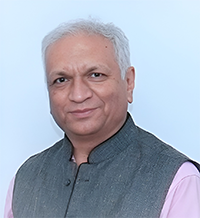
Ashish Garde
Member, CII National Startup Council and Founder & Director
MAGIC (Marathwada Accelerator for Growth & Incubation Council)
MAGIC (Marathwada Accelerator for Growth & Incubation Council)

India’s Startup Journey Beyond Metropolitan Cities
Over the past decade, India’s startup ecosystem has witnessed a decisive transformation. What was once largely concentrated in metropolitan centres and national institutes of eminence such as the IITs and IIMs has steadily expanded into Tier-2 and Tier-3 cities and even rural regions. This shift reflects wider access to digital technologies, improving physical and institutional infrastructure, and a growing acceptance of entrepreneurship as a credible and aspirational career path for the youths.
This transformation is clearly reflected in national data. As of January 2026, India has over 200,000 startups recognised by the Department for Promotion of Industry and Internal Trade (DPIIT), with startup presence across more than 653 districts nationwide. Significantly, nearly 50 percent of these startups originate from Tier-2 and Tier-3 cities and rural regions, highlighting the deep penetration of entrepreneurship beyond traditional urban centres.
Startups emerging from non-metro regions are increasingly rooted in local realities. Many are focused on solving region-specific challenges in sectors such as agriculture, healthcare, manufacturing, green mobility, smart infrastructure, and digital services. These enterprises are often built around practical, cost-effective innovative solutions with clear market relevance, making them both commercially sustainable and socially impactful.
A key enabler of this growth has been the strengthening of structured support systems for early-stage entrepreneurs through initiatives such as the Startup India Seed Fund. Across smaller cities and districts, startups today can access mentoring from experienced professionals, technical and product development guidance, prototyping and testing facilities, shared workspaces, and support related to intellectual property and regulatory compliance. Such support has significantly lowered entry barriers, particularly for first-generation entrepreneurs and small teams. These facilities are being made available through a well-spread national network of incubators.
Government initiatives have played a catalytic role in expanding entrepreneurship across geographies. Over the last ten years, programmes led by the DPIIT under the Startup India mission have created a more inclusive national framework for entrepreneurship. Well-structured schemes related to seed funding is now not only supported by DST, but MSME ministry, defence innovation through iDEX, and electronics and information technology through the MeitY Startup Hub and Atal Innovation Mission have further strengthened institutional support for entrepreneurs across the country. State nodel agencies like Maharashtra State Innovation Society are taking proactive steps for building rural startup ecosystem.
Another significant development is the growing integration of entrepreneurship with skill-based and academic institutions such as ITIs, polytechnics, engineering colleges, and management schools. By combining technical education with exposure to innovation, incubation, and business development, these institutions—alongside premier national institutes—are enabling students to explore self-employment and enterprise creation. This approach is strengthening local job creation and reducing long-term migration of skilled talent to metropolitan cities.
Incubators and accelerators have emerged as critical pillars of this Startup ecosystem. While deep-tech unicorns and globally scalable startups are important for India’s innovation narrative, equal significance lies in nurturing grassroots and district-level enterprises that address everyday economic and social challenges. In this context, MAGIC – Marathwada Accelerator for Growth and Incubation Council exemplifies the role of industry-association-led incubators at regional level in India by connecting startups with industry, academia, and government support mechanisms.
At the national level, centres of excellence such as CII CIES play a crucial bridging role between startups, innovators, and the corporate innovation ecosystem. By enabling industry-led problem statements, pilot deployments, and scale-up opportunities, such platforms help translate innovation into real-world applications and accelerate market adoption.
The outcomes of this growth are increasingly visible. Startups from smaller cities are creating direct employment, generating revenues, strengthening local supply chains, and contributing to regional self-reliance. In several regions, this has also helped retain talent that would otherwise migrate to larger urban centres.
India’s startup ecosystem is expected to deepen further in areas such as agri-technology, defence manufacturing, clean energy, green mobility, and export-oriented enterprises. Sustained investment in incubation infrastructure and stronger collaboration between industry, academia, and government—across national and regional incubators—will be essential to sustain this momentum.
This transformation is clearly reflected in national data. As of January 2026, India has over 200,000 startups recognised by the Department for Promotion of Industry and Internal Trade (DPIIT), with startup presence across more than 653 districts nationwide. Significantly, nearly 50 percent of these startups originate from Tier-2 and Tier-3 cities and rural regions, highlighting the deep penetration of entrepreneurship beyond traditional urban centres.
Startups emerging from non-metro regions are increasingly rooted in local realities. Many are focused on solving region-specific challenges in sectors such as agriculture, healthcare, manufacturing, green mobility, smart infrastructure, and digital services. These enterprises are often built around practical, cost-effective innovative solutions with clear market relevance, making them both commercially sustainable and socially impactful.
A key enabler of this growth has been the strengthening of structured support systems for early-stage entrepreneurs through initiatives such as the Startup India Seed Fund. Across smaller cities and districts, startups today can access mentoring from experienced professionals, technical and product development guidance, prototyping and testing facilities, shared workspaces, and support related to intellectual property and regulatory compliance. Such support has significantly lowered entry barriers, particularly for first-generation entrepreneurs and small teams. These facilities are being made available through a well-spread national network of incubators.
Government initiatives have played a catalytic role in expanding entrepreneurship across geographies. Over the last ten years, programmes led by the DPIIT under the Startup India mission have created a more inclusive national framework for entrepreneurship. Well-structured schemes related to seed funding is now not only supported by DST, but MSME ministry, defence innovation through iDEX, and electronics and information technology through the MeitY Startup Hub and Atal Innovation Mission have further strengthened institutional support for entrepreneurs across the country. State nodel agencies like Maharashtra State Innovation Society are taking proactive steps for building rural startup ecosystem.
Another significant development is the growing integration of entrepreneurship with skill-based and academic institutions such as ITIs, polytechnics, engineering colleges, and management schools. By combining technical education with exposure to innovation, incubation, and business development, these institutions—alongside premier national institutes—are enabling students to explore self-employment and enterprise creation. This approach is strengthening local job creation and reducing long-term migration of skilled talent to metropolitan cities.
Incubators and accelerators have emerged as critical pillars of this Startup ecosystem. While deep-tech unicorns and globally scalable startups are important for India’s innovation narrative, equal significance lies in nurturing grassroots and district-level enterprises that address everyday economic and social challenges. In this context, MAGIC – Marathwada Accelerator for Growth and Incubation Council exemplifies the role of industry-association-led incubators at regional level in India by connecting startups with industry, academia, and government support mechanisms.
At the national level, centres of excellence such as CII CIES play a crucial bridging role between startups, innovators, and the corporate innovation ecosystem. By enabling industry-led problem statements, pilot deployments, and scale-up opportunities, such platforms help translate innovation into real-world applications and accelerate market adoption.
The outcomes of this growth are increasingly visible. Startups from smaller cities are creating direct employment, generating revenues, strengthening local supply chains, and contributing to regional self-reliance. In several regions, this has also helped retain talent that would otherwise migrate to larger urban centres.
India’s startup ecosystem is expected to deepen further in areas such as agri-technology, defence manufacturing, clean energy, green mobility, and export-oriented enterprises. Sustained investment in incubation infrastructure and stronger collaboration between industry, academia, and government—across national and regional incubators—will be essential to sustain this momentum.